Welcome home: Europe's cloud moment
Sovereignty as a competitive advantage
Background
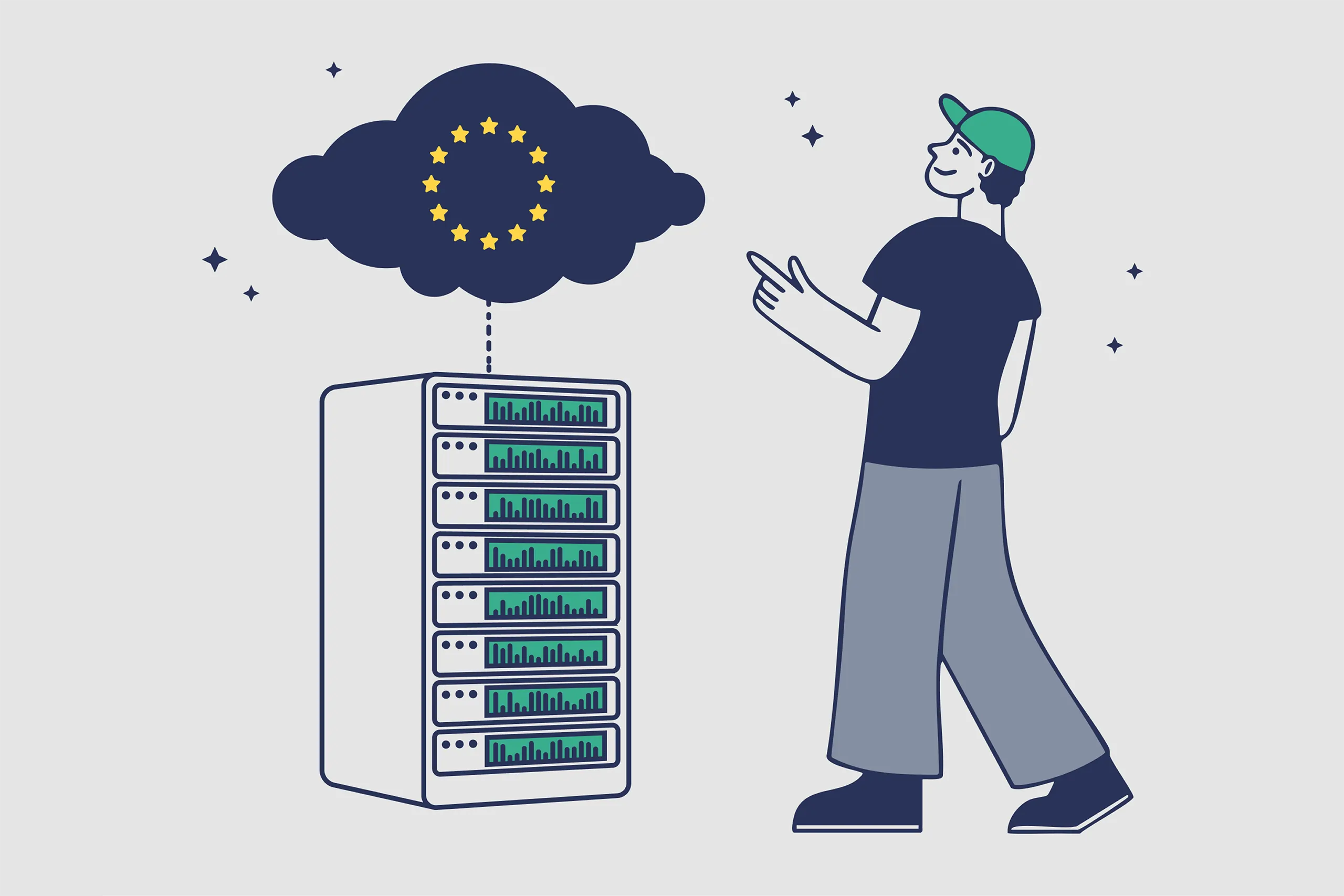
Europe is undergoing a transformation in its approach to digital infrastructure: an increasing number of companies are exploring alternatives to the major American cloud market leaders and are discovering the advantages of sovereign cloud solutions. This trend reflects growing confidence in European providers, along with a desire for more sustainable, resilient, and independent approaches.
Sovereignty instead of dependency
This interest was initially driven above all by concerns surrounding privacy and state surveillance. Revelations about global espionage programmes made many organisations aware of how far the reach of foreign authorities into global IT infrastructures can extend. Political developments in recent years (and days) have further increased the pressure to place greater emphasis on developing and maintaining in-house digital capabilities. For many companies, dependence on US providers is no longer seen solely as a data protection risk, but increasingly as an economic and strategic disadvantage as well.
For the time being, the balance of power remains highly uneven: around 70 percent of the European cloud market is served by Amazon, Microsoft and Google, while only about 15 percent is accounted for by European providers. This imbalance is also reflected in pricing: in recent years and months, the costs charged by the market leaders have risen steadily. Although domestic alternatives have become more attractive by comparison, and the share prices of European cloud companies have already increased noticeably, stakeholders often remain hesitant. Out of concern about making the wrong decisions, they rely more often than necessary on familiar, “safe” solutions, even when these are not always the best (or even objectively the most secure) options.
Small and medium-sized enterprises in particular could already migrate to European infrastructure today with virtually no risk. For many products and services, hyperscalers are neither technically nor economically necessary. Such a move not only strengthens digital sovereignty and reduces GDPR-related risks, but can also be communicated as a clear unique selling point: in Germany especially, scepticism towards US-based services is growing, along with demand for trustworthy alternatives.
The issue gained even greater momentum following the European Digital Sovereignty Summit, which took place in Berlin on 18 November 2025. The initiative launched by Germany and France marked a turning point: both countries committed themselves to reducing Europe’s dependence on US technology corporations and to strengthening their own digital ecosystems. The political message is clear: digital sovereignty is not a technical detail, but a prerequisite for economic stability, innovation and societal progress.
Our approach
Zest Labs has always taken a technology-agnostic approach. Rather than favouring individual platforms or providers, we analyse our clients’ specific requirements and develop tailored strategies and product architectures. Our guiding principle is clear: we build solutions that work today and remain viable tomorrow.
We rely on future-proof infrastructure and follow the latest best practices in cloud and software development. At the same time, we are well aware of how quickly paradigm shifts can render established technologies obsolete. This experience shapes our work: we design systems that can be flexibly adapted, migrated and extended.
What does that mean exactly?
The European market is becoming more diverse and already offers equivalent alternatives for the majority of typical use cases. However, certain challenges remain, particularly for companies looking to scale globally. In addition, many domestic providers tend to tailor their offerings towards larger enterprises and offer little or no opportunity to get started with a project immediately. As a result, individual developers and smaller start-ups often find it easier to set up projects quickly and with minimal friction using the well-known market leaders.
Enter Scaleway
Scaleway is a French cloud provider with data centres in France, the Netherlands and Poland. Although its portfolio does not yet cover all the services offered by Amazon (AWS), Google (GCP) or Microsoft (Azure), it nonetheless includes many of the core services required to operate a modern internet application. These include, alongside classic virtual machines and bare-metal servers, a wide range of essential services such as an object store (S3-compatible), block storage, VPC, IAM, load balancers, managed Kubernetes, serverless functions and containers, managed databases, and transactional email.
AI made in Europe
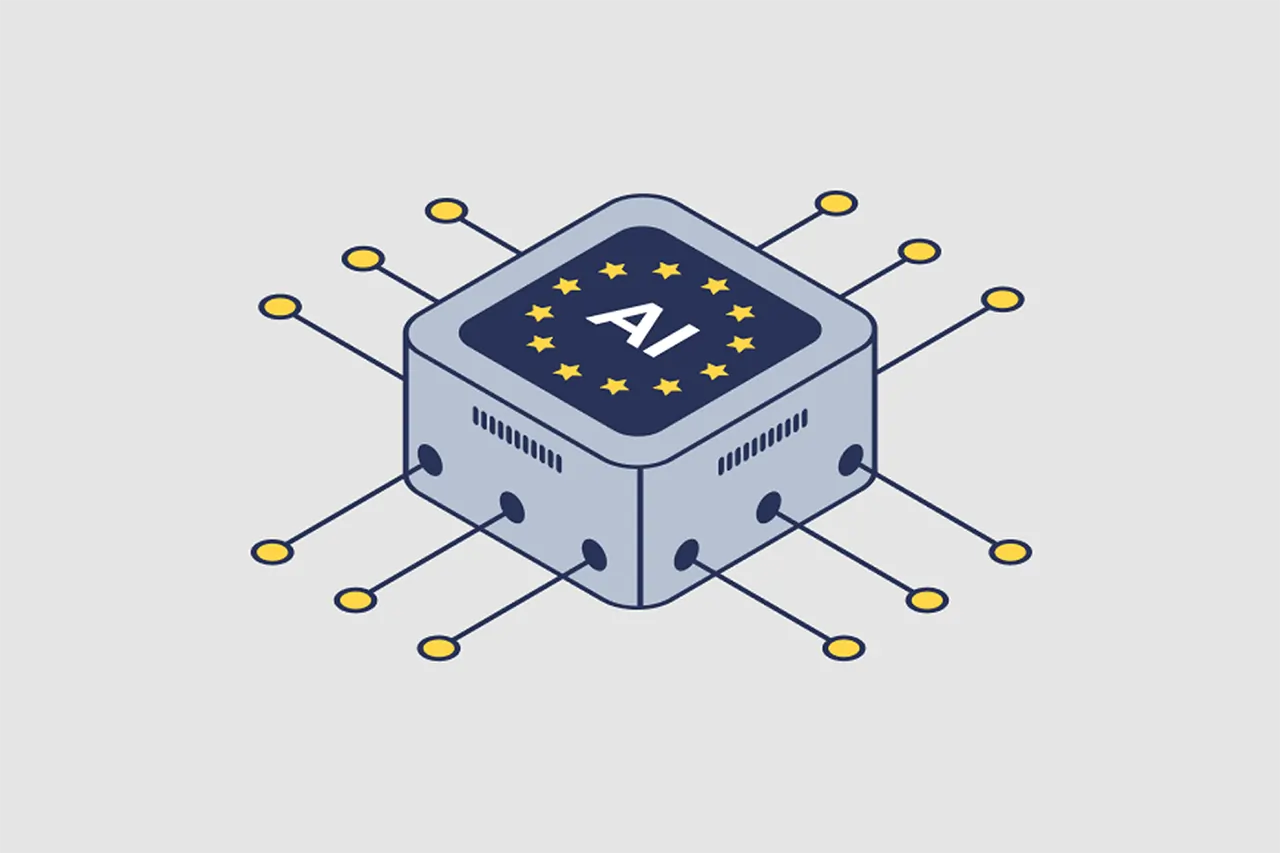
For the development of AI-powered applications and features, Scaleway also provides customers with powerful GPU instances and a wide selection of widely used models offered under the Model-as-a-Service (MaaS) principle, all available for immediate use. These include Mistral AI, one of Europe’s leading providers of AI solutions (also headquartered in France), whose state-of-the-art models are specifically designed to meet European requirements for data protection, transparency and technological sovereignty.
Combined with Scaleway's data centres operated within Europe, this enables the creation of sovereign AI platforms on which sensitive data does not leave the European legal jurisdiction. We contribute our own hands-on experience in operating Scaleway environments and in the practical use of Mistral models within customer-specific applications — from selecting suitable models and fine-tuning them to prompt design and seamless integration into existing backend and frontend architectures.
For companies seeking to strengthen their digital sovereignty while simultaneously minimising regulatory risks in environmental and supply chain law, choosing a European, sustainability-focused provider thus becomes a strategic lever for compliance.
Environmental Responsibility and Compliance
European cloud providers are subject to the same regulatory frameworks as their customers (including LkSG, CSRD, ESRS, and the EU Taxonomy) and are therefore increasingly developing their products to be “reporting-ready,” for example through standardized reports on CO₂ emissions and water usage. The environmental reports provided by Scaleway simplify preparation for stricter verification and documentation requirements along the supply chain. For customers, this means less manual effort in collecting environmental metrics, improved auditability, and a clearer basis for communication with stakeholders, regulators, and environmentally conscious clients.
Scaleway combines this compliance focus with a consistently sustainable operational strategy in its data centres. This includes measures such as extending hardware lifecycles, responsible water management, and the use of renewable or low‑carbon energy. All of this reduces the ecological impact of the workloads being operated. For companies looking to strengthen their digital sovereignty while simultaneously minimising regulatory risks in environmental and supply chain law, choosing a European, sustainability‑oriented provider thus becomes a strategic lever for compliance.
Example Comparison of an App Cluster on AWS vs. Scaleway
In terms of pricing, Scaleway services generally fall well below the levels of the established hyperscalers, while projects can be implemented just as quickly as with their US-based competitors. Our certified Scaleway experts are happy to assist you with the migration or with setting up a suitable environment.
Configuration
AWS*
Scaleway*
Development Cluster
Kubernetes Cluster, 1x Worker Node (2 vCPUs, 4 GB RAM), LB, 20 GB object storage, 200 GB traffic, managed Postgres
AWS*
325 €
Scaleway*
45 €
Production Cluster
Kubernetes Cluster, 3x Worker Nodes (4 vCPUs, 16 GB RAM), LB, 20 GB object storage, 200 GB traffic, managed Postgres
AWS*
810 €
Scaleway*
400 €
* approximate monthly cost
Innovative, Sovereign, Cost-Effective
In an increasingly connected world, digital sovereignty has become a competitive factor. European companies are recognising the importance of maintaining control over their data, processes, and technologies. Sovereign cloud solutions provide the foundation for this — secure, compliant, and independent of non-European providers.
Sovereignty Begins with Your Data
For European companies, cloud sovereignty means above all one thing: retaining control over their own data. In the face of global dependencies, geopolitical tensions, and increasingly stringent regulatory requirements, the importance of sovereign, resilient, and compliant cloud infrastructures is growing. Organisations need solutions that are not only secure but also free from non-European access.
Zest Labs helps companies and public institutions develop modern, sovereign products or responsibly scale existing solutions based on current standards. This strengthens operational and negotiating capabilities, protects valuable innovations, and builds trust in the handling of sensitive data. Thanks to providers like Scaleway, our clients can even achieve cost savings in the process.
Get in touch with our team to find out how Zest Labs can support your company or organisation on the path to greater digital sovereignty.
Get in touch
Prefer to contact us directly? No problem, we’re happy to hear from you. Whether you have a question, want to work with us, or simply learn more about Zest Labs, we’re here to help.
Frequently asked questions
- Yes. In many cases, migration is technically straightforward, often requiring only minor adjustments and without any functional limitations.